Somewhere between the tongs, the too-wide grate, and the onion that dove into the coals, most of us quietly gave up on grilling vegetables. A rolling grill basket fixes the whole category at once — it’s a sealed, food-grade mesh drum that lets flame and smoke in but never lets dinner out. Here’s the complete method we use at the Otawe Test Kitchen, from prep to clean-up.
What a rolling grill basket actually does
Think of it as a tumble-dryer for food. Instead of flipping forty individual pieces with tongs, you roll the whole basket a quarter-turn every few minutes. Every mushroom, shrimp, and pepper strip rotates through the hot zone, chars a little, and rotates out — which is how you get that even, restaurant-style char without a single sacrifice to the fire gods.
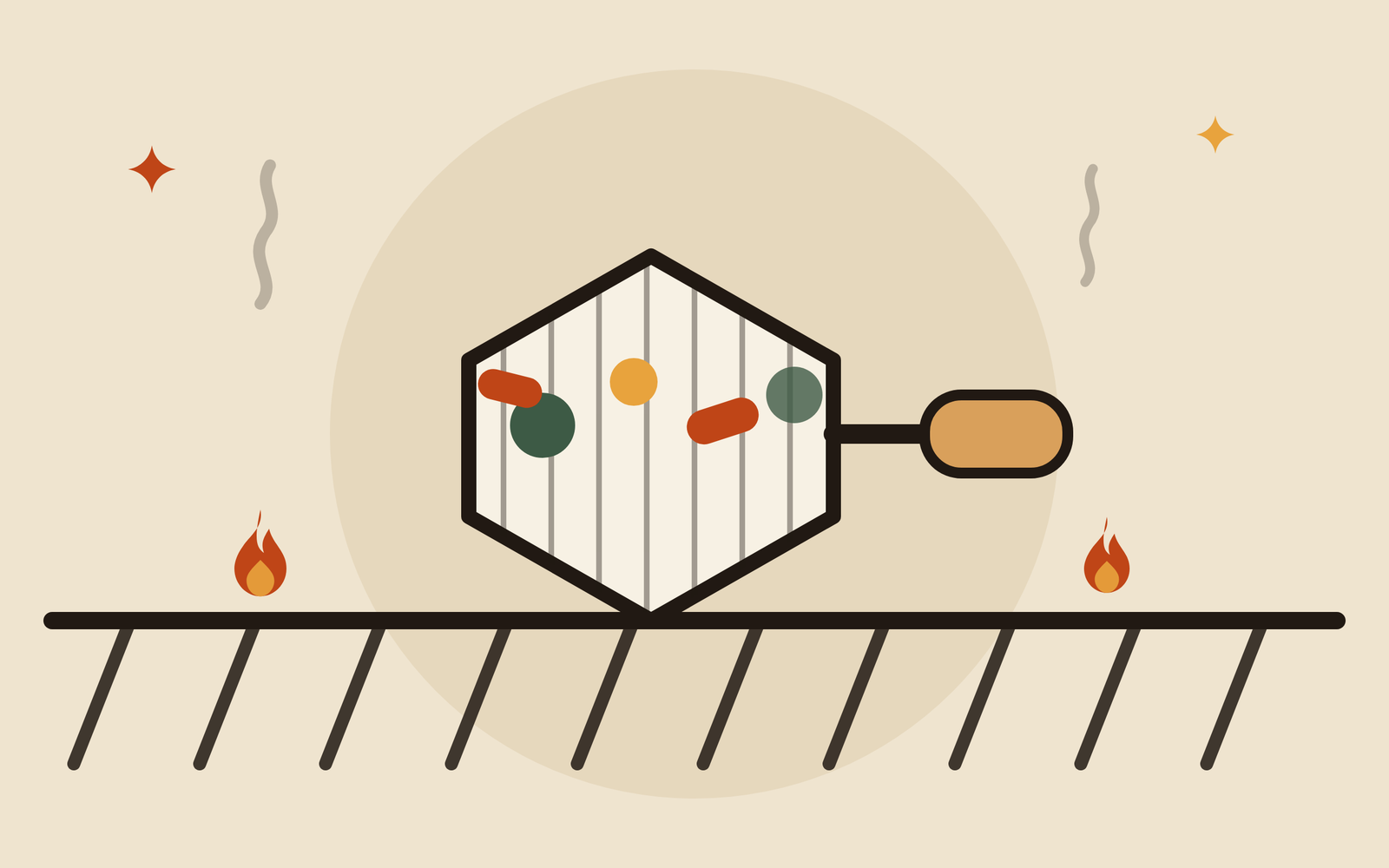
The Otawe basket is a hexagon rather than a cylinder, and that’s not styling: flat faces mean the basket parks between rolls instead of drifting across the grate. You control the tumble; gravity doesn’t.
Step 1 — Cut everything the same size
The basket cooks evenly; your knife work decides whether that’s a blessing. Aim for pieces that finish at the same time:
| Food | Cut | Rough time over direct heat |
|---|---|---|
| Bell peppers, onions | 1-inch strips / thick petals | 10–12 min |
| Zucchini, squash | ½-inch half-moons | 8–10 min |
| Mushrooms | halved (small ones whole) | 8–10 min |
| Shrimp | whole, peeled | 4–6 min |
| Baby potatoes | halved & par-boiled 8 min | 12–14 min |
Step 2 — Oil the basket, load it two-thirds full
Wipe or spray the mesh with a high-smoke-point oil (avocado, canola) while it’s still cold. Toss your vegetables in a bowl with oil and salt first, then load. The two-thirds rule matters: food needs headroom to tumble. A packed basket steams; a two-thirds basket chars.
Salt before grilling, but save delicate seasonings — herbs, citrus zest, grated cheese — for after. They burn at grill temperatures and taste like regret.
Step 3 — Set up two heat zones
Bank your coals to one side, or on a gas grill run half the burners high and half off. You want a hot lane (direct) and a parking lane (indirect). Start the basket over direct heat with the lid open.
Step 4 — Find the rolling rhythm
Here’s the whole technique: quarter-roll every 2–3 minutes. Use the beech handle — it stays cool — give the basket a push to the next flat face, and walk away. If flare-ups get ambitious, slide the basket to the indirect lane for a minute; the mesh protects the food from direct flame licks better than any grate can.
Total cook time runs 8–14 minutes for most vegetables (see the table above). You’re done when edges are deeply browned and a knife slides through the thickest piece.
Step 5 — Pour, don’t pick
This is the best moment of basket ownership: open the lid over the platter and pour. Forty pieces plate themselves in two seconds. Finish with flaky salt, a squeeze of lemon, or a knob of butter melting into the char.
Cleaning (the 90-second version)
Unscrew the wood handle and set it aside — it gets a quick hand wash. The steel basket goes straight into the dishwasher, or into a sink of hot soapy water while you eat. Glazes and marinades release after a short soak; a brass brush handles anything stubborn. That’s it — 304 stainless doesn’t hold grudges.
Troubleshooting
Food is steaming, not charring
Basket’s too full, or heat’s too low. Drop to two-thirds capacity and start over direct heat.
Sticking
Oil the cold mesh before every cook, and don’t roll in the first 2 minutes — food releases naturally once it sears.
One side cooks faster
Your grill has hot spots (they all do). Rotate the basket end-for-end once mid-cook, not just face-to-face.
Food safety, quickly
If you’re mixing proteins into the basket, cook to USDA safe minimums: 145°F for fish, 160°F for ground meats, 165°F for poultry. An instant-read thermometer through the mesh takes three seconds and settles every argument — see the USDA chart below.
Sources & further reading
- USDA Food Safety & Inspection Service — Safe Minimum Internal Temperature Chart
- AmazingRibs.com — The science of grilling: heat zones & flare-up management
- Serious Eats — Vegetable grilling techniques & cut-size testing
- Otawe Test Kitchen — in-house cook tests on gas, charcoal & open fire, summer 2026